
Site and soil review
Evaluate slope, drainage, bearing capacity, frost conditions, and access.
PREPARING A SOLID BASE
Prepare a stable, level and well-drained base for a container house by coordinating soil conditions, frost protection, support points, access and local engineering requirements.
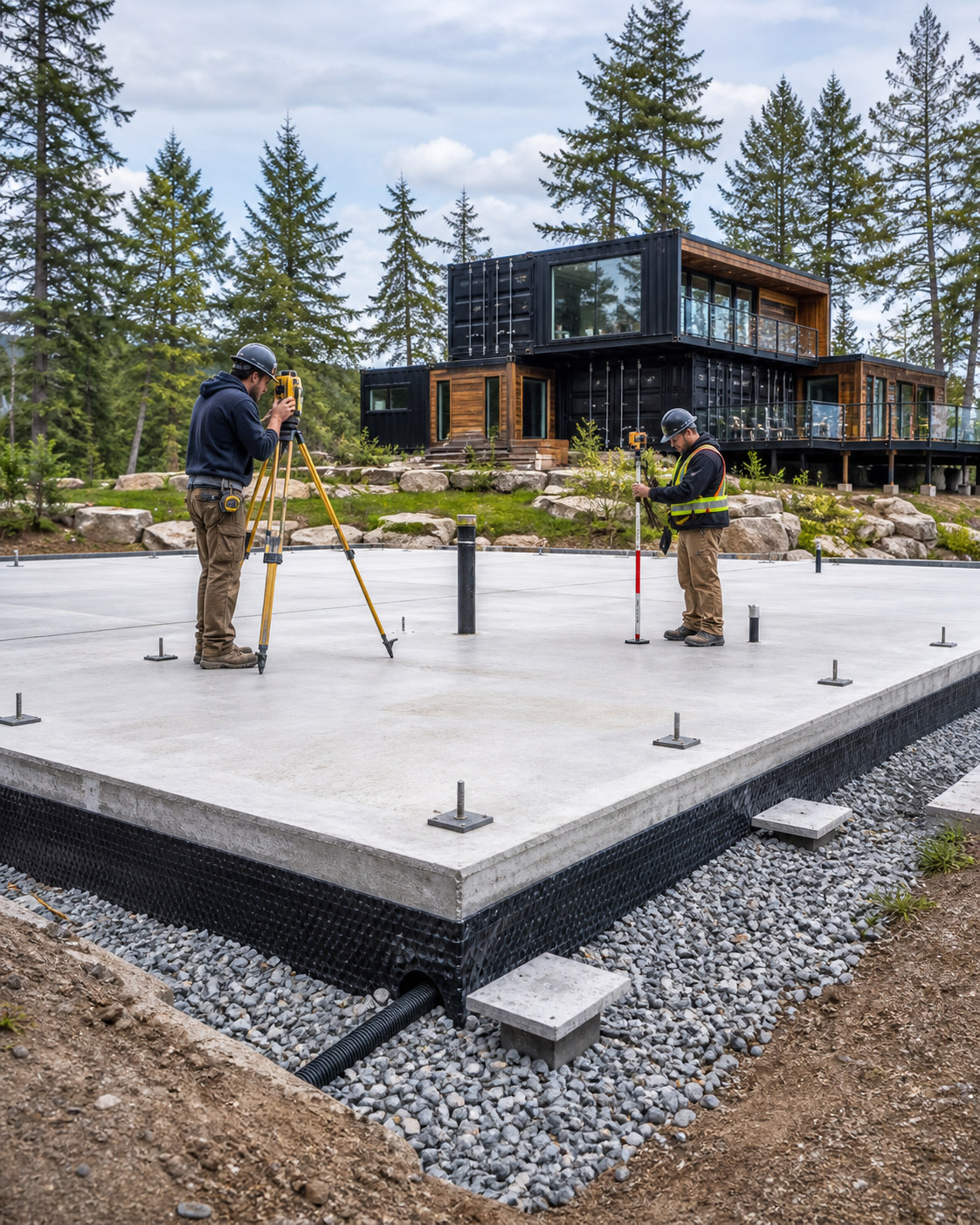 PREPARING A SOLID BASE
POINTS TO REVIEW
Create a level, stable, properly drained foundation system that supports the model and local climate requirements.
Evaluate slope, drainage, bearing capacity, frost conditions, and access.
Compare slabs, piers, footings, crawlspaces, piles, and engineered supports.
Grade the property and plan gravel, drainage, membranes, and water management.
Confirm support points, anchoring, alignment, elevations, and inspections.
 PREPARE THE RIGHT QUESTIONS
BEFORE MOVING FORWARD
The exact answers depend on the property, municipality, model, and professionals involved.
Has the soil and drainage condition been evaluated?
Which foundation type is approved for the project?
Are support points aligned with the model drawings?
Is the base complete and level before delivery?
A container house needs a foundation or support system that is appropriate for the model, the property and local conditions. The goal is simple: provide a stable, level, properly drained base that supports the structure at the correct locations and remains reliable through seasonal changes.
The foundation should be planned before delivery. Correcting an unsuitable base after a large modular unit arrives can create delays, additional lifting costs and unnecessary site work.
Before selecting a foundation type, review the actual property. Important factors can include soil bearing capacity, slope, drainage, frost depth, groundwater, access for equipment and the final elevation of the building.
For permanent residential projects, use qualified local professionals when engineering, geotechnical review or permits are required.
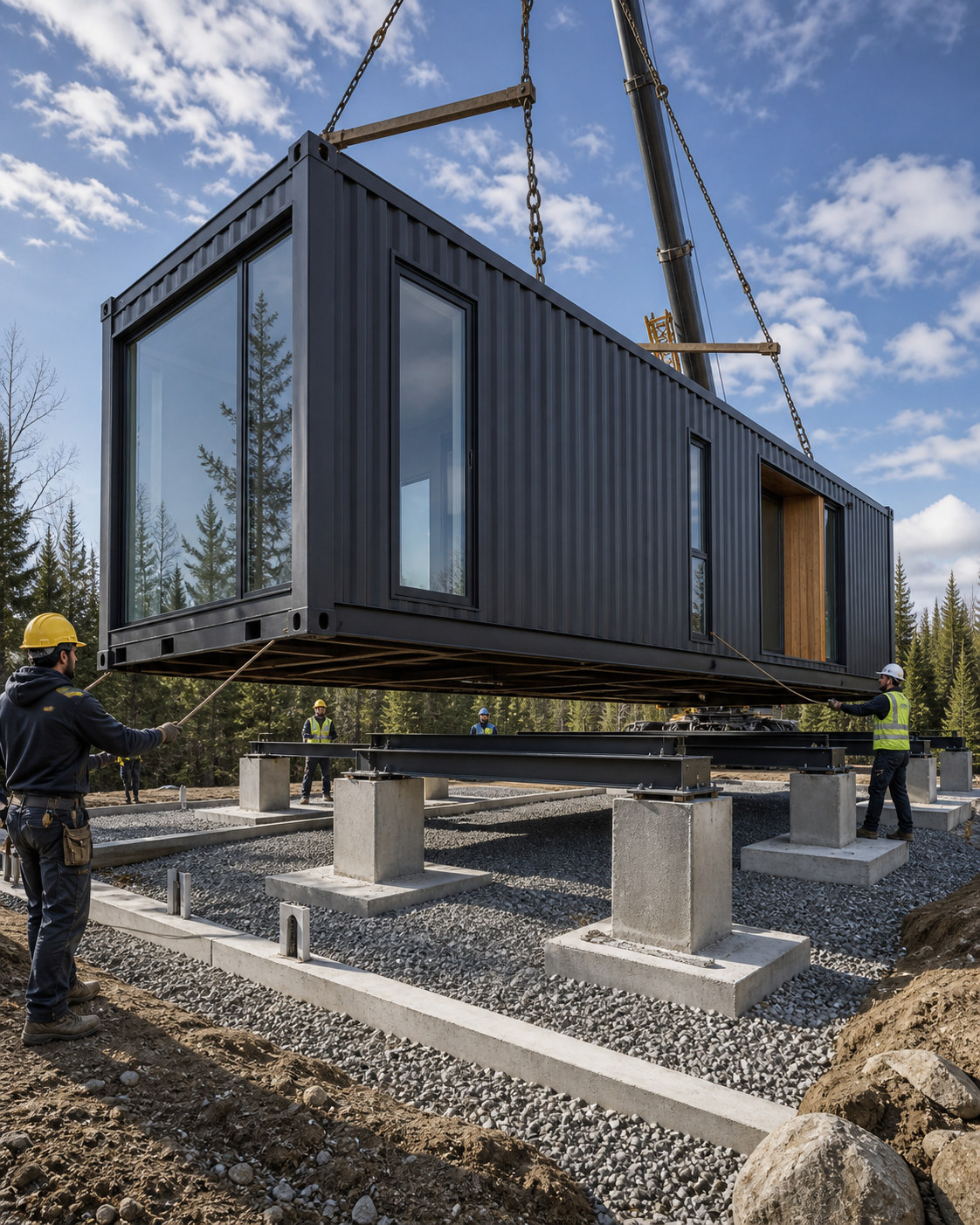
Depending on the project, a container-style modular home may be installed on an engineered concrete slab, footings, piers, piles, crawlspace walls or another approved support system. There is no universal foundation that is correct for every model or property.
The support locations must match the structural requirements of the selected home. Do not assume that adding random support points is automatically better; the foundation and structure should work as one system.
A small elevation error can affect doors, windows, floor alignment and connections between modular sections. Before delivery, confirm the finished elevations and support locations against the model information available for your project.
Drainage and moisture management are equally important. Grade the surrounding area so water does not collect under or against the building. Where membranes, gravel, drainage systems or other moisture-control measures are required, they should be completed before the home is placed.
Anchoring requirements vary by structure, foundation, wind exposure and local rules. Confirm the required system with the professionals responsible for the installation.
The foundation should be complete, accessible and ready before the delivery date. If a crane or specialized carrier is required, the equipment operator also needs enough room to work safely.
Review the on-site delivery guide together with the foundation plan so access, unloading and final placement are coordinated rather than treated as separate tasks.
Foundation requirements can differ between municipalities and projects. Before building the base, confirm the intended use of the home, the selected model and the applicable permit or engineering requirements with your local authority. Our City Regulations guide explains what to verify before ordering.
RELATED NEXT STEPS
Find collections that fit the confirmed requirements.
Explore Our Models →See how we coordinate the product, documentation, and logistics.
View Our Services →Plan property access, unloading, and installation requirements.
View Delivery Details →READY FOR A MORE PRECISE CONVERSATION
Include the model, province, municipality, intended use, and timeline.